



 Outfit Matching Jewelry
 Earring Studs
 Earrings
 Pendant


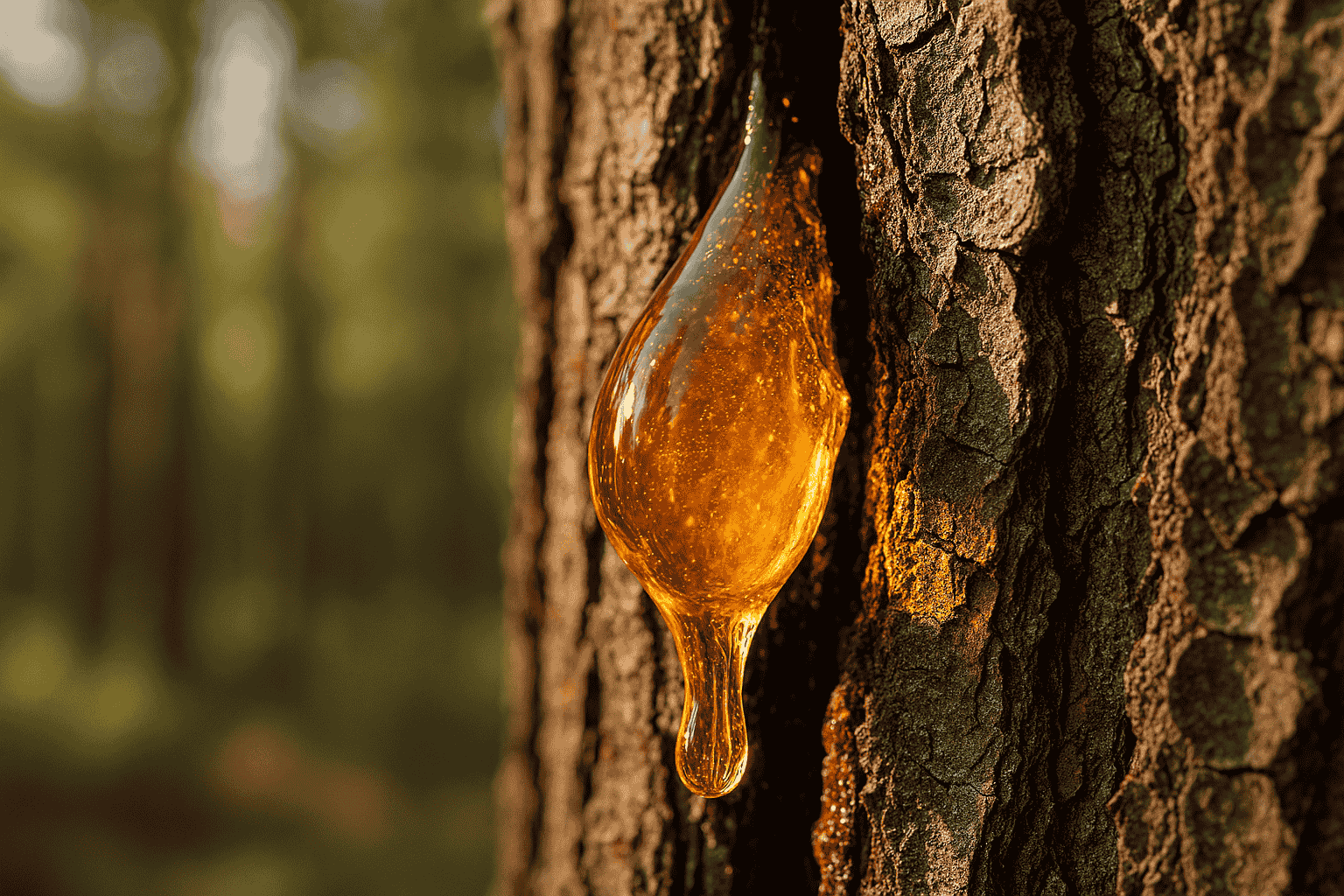
Quick Answer: The meaning of ‘resin’ in Urdu is ‘رال’ (Raal) or ‘گوند’ (Gond). It refers to a sticky, semi-solid organic substance secreted by plants – especially coniferous trees – or manufactured synthetically through chemical bonding process. In formal Urdu, ‘Raal’ is the most accurate translation. ‘Gond’ loosely refers to natural plant gum and is used more in everyday speech.
You searched “resin meaning in Urdu” — and most online Urdu dictionaries gave you a single word and moved on. That is the real problem. In fact, the meaning of ‘resin’ in Urdu is not just a translation exercise. It is a word that sits at the intersection of chemistry, botany, crafting, and industrial manufacturing, and a single Urdu equivalent rarely tells the full story. Let me give you the complete picture.
Related Products
-
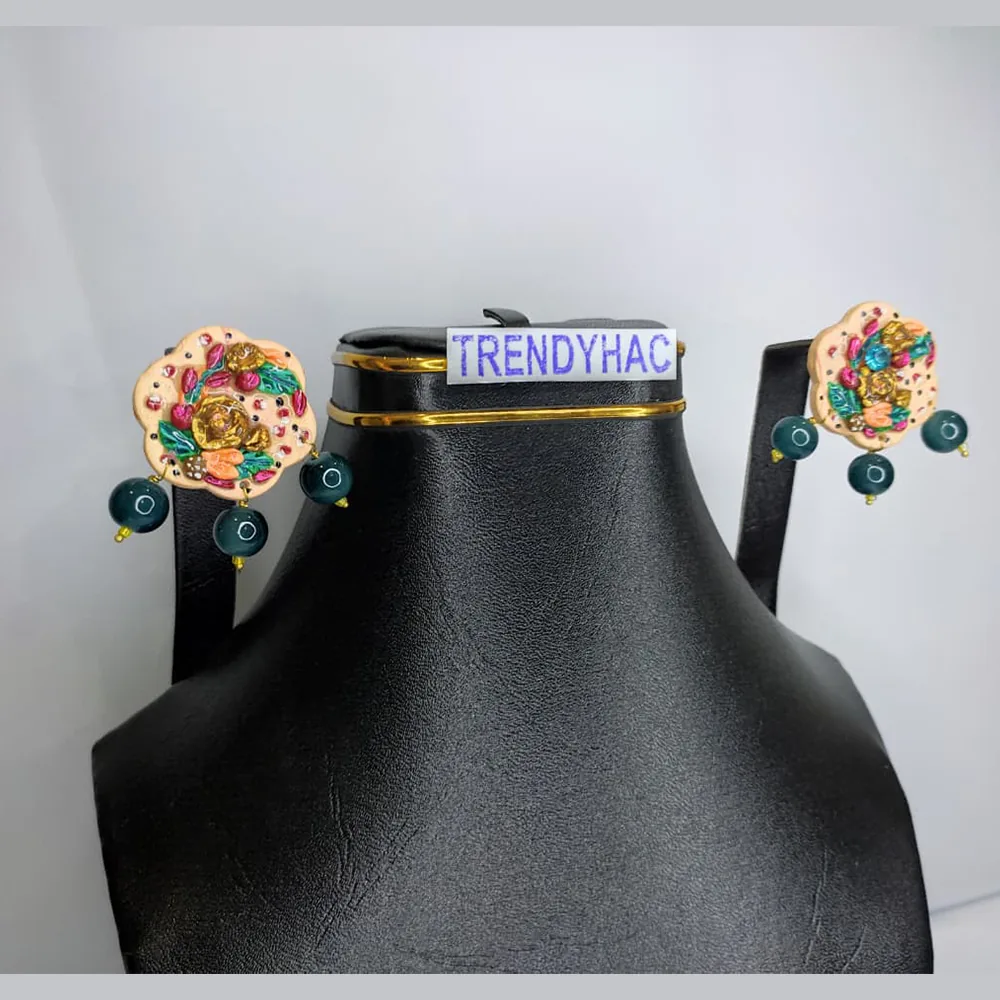
3D Earring Studs with Green Beads | Resin and Clay Jewellery
Original price was: ₨1,299.00.₨999.00Current price is: ₨999.00. -
3D Multicolor Earrings | Resin and Clay Jewellery
Original price was: ₨1,999.00.₨1,299.00Current price is: ₨1,299.00. -

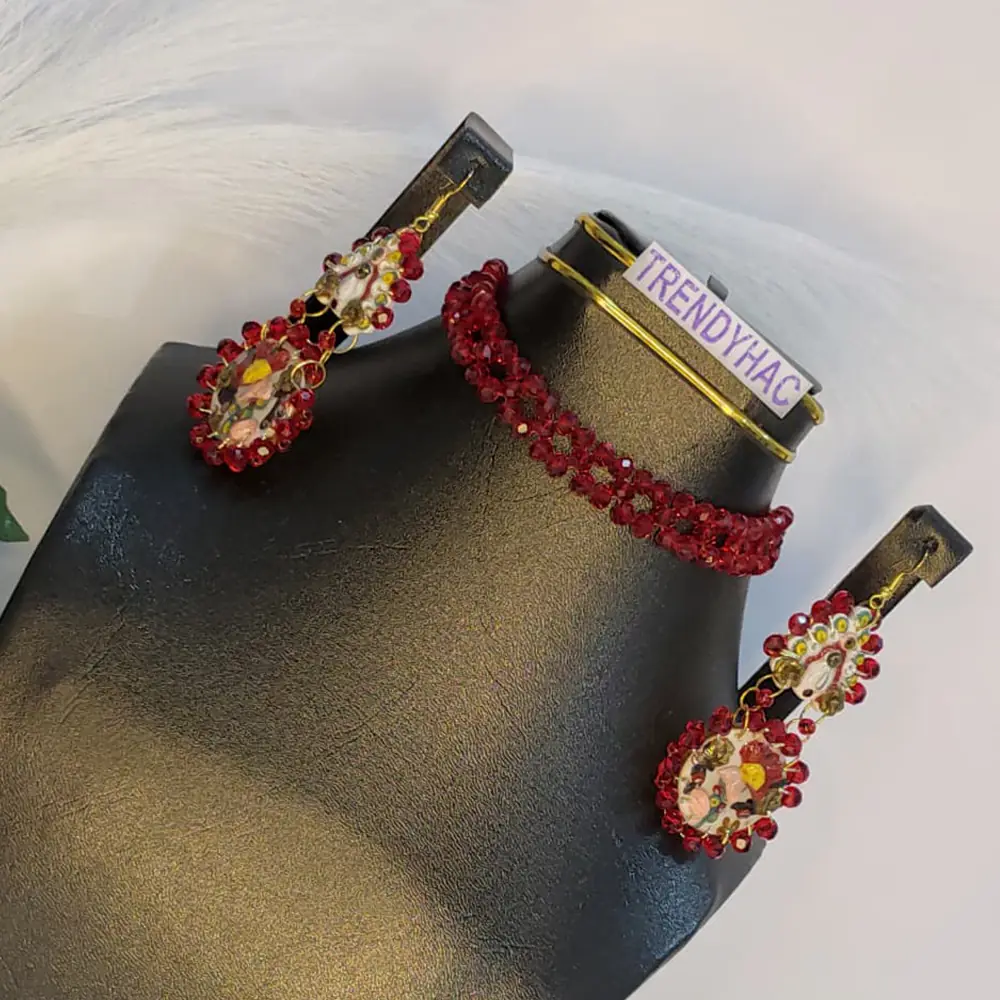
3d Red Floral Choker Earrings | Handmade Beaded Jewelry | Resin and Clay Jewellery
₨2,499.00 -
Abstract Marbled Statement Earrings | Modern Artistic Resin Earrings | Resin and Clay Jewellery
Original price was: ₨1,199.00.₨699.00Current price is: ₨699.00. -
Artistic Earring Studs | Resin and Clay Jewellery
Original price was: ₨999.00.₨599.00Current price is: ₨599.00. -
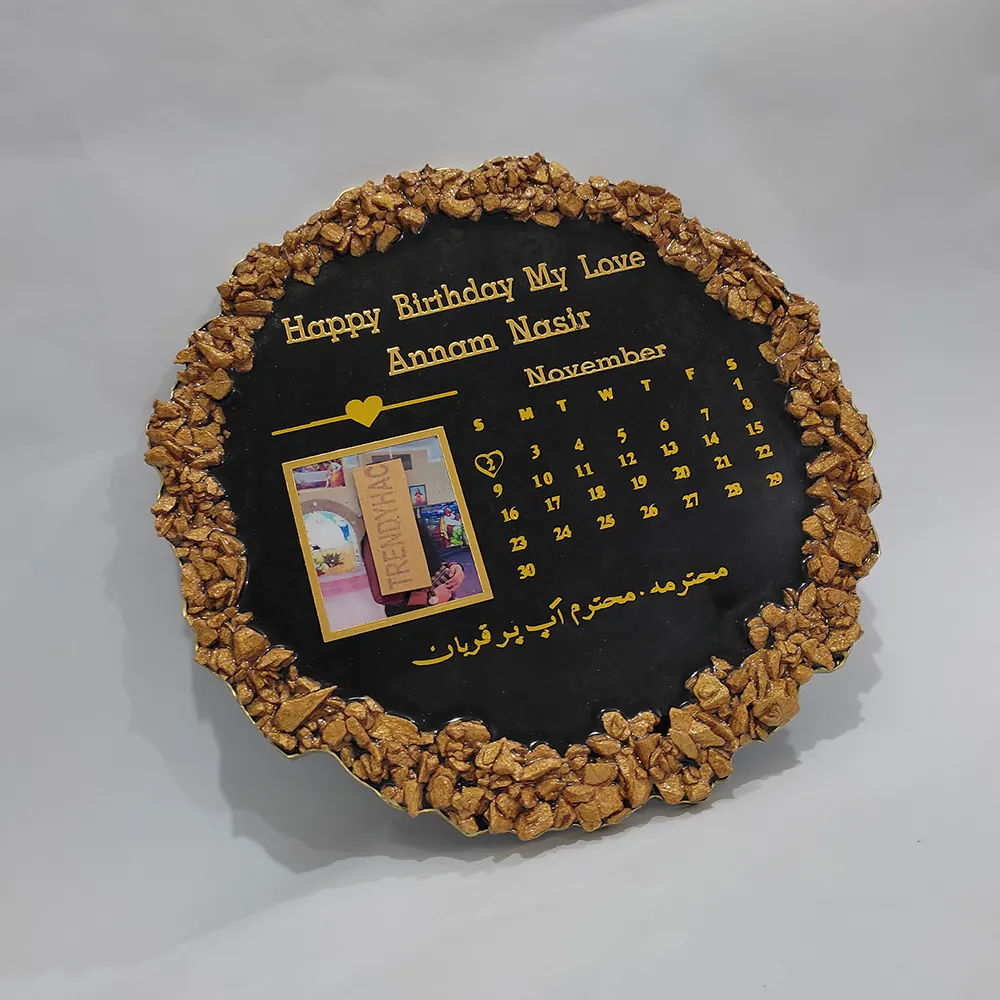
Birthday Resin Plaque | Personalised Resin Plaque | Birthday Gift | Handmade Resin Plaque | Black Resin Plaque
Original price was: ₨10,999.00.₨6,999.00Current price is: ₨6,999.00.



Resin: Urdu Meaning with Definition
رال (Raal) is the most precise and formally accepted Urdu translation of resin. You will also find گوند (Gond) in older dictionaries and regional texts as well as occasionally چیڑ (Cheer), which specifically refers to pine derived resin in certain dialects. A fourth term, لاکھ (Laakh), appears in traditional crafts as a reference to natural resin based lacquer.
The word “resin” itself traces back to Late Middle English, rooted in the Latin “resina”, which connects to the Greek “rhētinē” – meaning pine resin. So even in its original English form, the word has always pointed back to tree secretions.
Here is what most Urdu dictionaries miss entirely: resin exists in two fundamentally different forms — natural and synthetic — and conflating the two leads to genuine confusion in both chemistry classes and crafting guides.
Definitions of Resin
Specifically, resin carries two distinct definitions depending on context. Both matter.
Definition 1 — Natural Resin (قدرتی رال): A class of yellowish-brown, solid or semi-solid, inflammable substances of vegetable origin. Natural resins are nonconductors of electricity, show a vitreous (glass-like) fracture when broken, and dissolve in alcohol and ether but not in water. Pine resin, also known as rosin, is the most recognised example.
Definition 2 — Synthetic Resin (مصنوعی رال): Any polymeric substance manufactured through the chemical bonding process of simple molecules, designed to replicate or improve upon the properties of natural resin. Epoxy resin, UV resin, polyester resin, and acrylic resin all fall under this category.
In polymer chemistry and materials science, resin is broadly described as a solid or highly viscous substance typically convertible into polymers — a definition that captures both types at once.
Synonyms for ‘Resin’ and Similar to Resin
Resin sits within a family of related substances. Knowing these synonyms helps you recognise the word across different subjects and sentence contexts:
| English Term | Urdu / Roman Urdu | Usage Context |
|---|---|---|
| Amber | کہربا / Kahruba | Fossilised ancient tree resin |
| Rosin | بیروزہ / Bairoza | Distilled pine resin, used in music and industry |
| Pitch | راتنج / Ratanj | Tar-like residue from resin processing |
| Gum / Mucilage | گوند / Gond | Natural plant gum, often confused with resin |
| Varnish | روغن / Roghan | Resin dissolved in solvent, used as wood coating |
| Shellac | لاکھ / Laakh | Resin secreted by lac insects, used as finish |
| Exudate | رطوبت / Ratubat | Any fluid secreted from plant tissue |
What Is Resin? The Honest Answer Beyond the Dictionary
Most people picture crafting tutorials when they hear “resin” — that glossy, glass-like material poured into silicone molds. That is one form of it, yes. However, resin has shaped human civilization for over 5,000 years before epoxy kits ever existed.
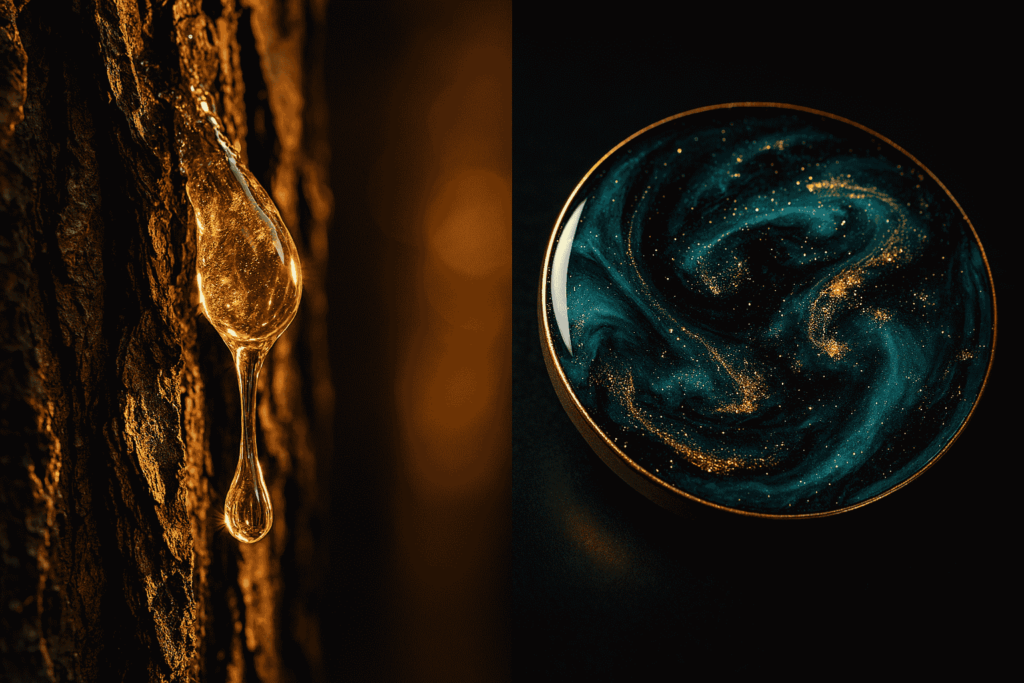
Natural resin is a thick sticky plant fluid that plants produce as a natural protection system against insects, pathogens, and physical injury. For instance, when a pine tree’s bark takes damage, sticky resin seeps out and hardens over the wound. Ancient Egyptians applied it during mummification. Early Greeks chewed mastic tree resin the way people chew gum today. Nearly all ancient incense was simply plant resin burned for fragrance and ritual.
Synthetic resin, however, arrived through the development of organic chemistry. As a result, scientists learned to replicate the physical properties of natural resin — the viscosity, the durability, the protective qualities — using oil based chemicals and controlled chemical reactions.
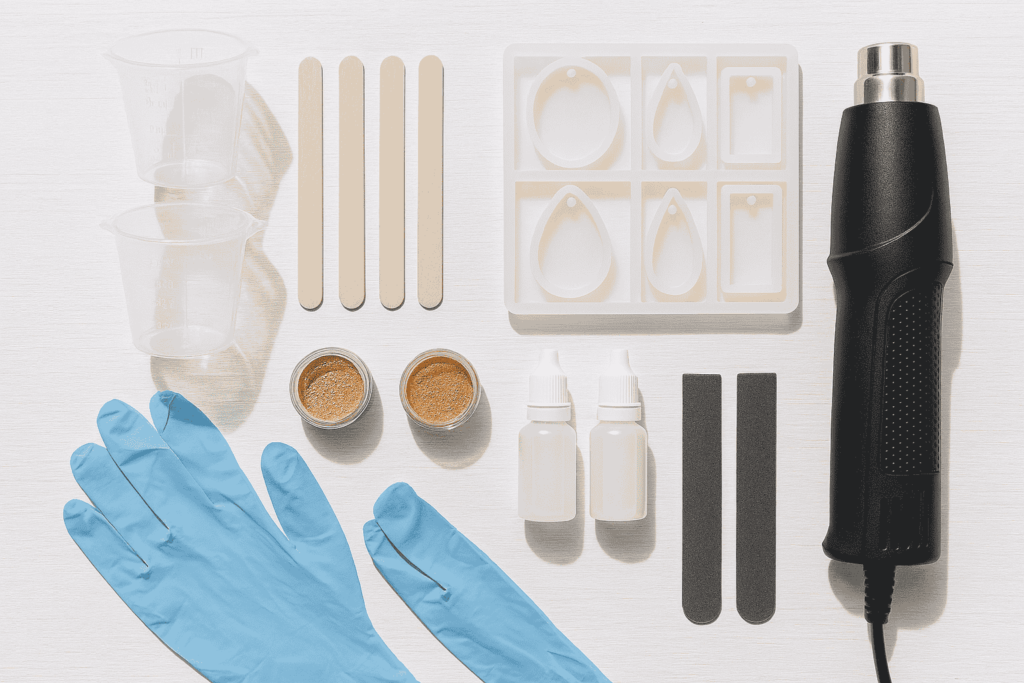
Learn how to work with resin hands-on → Resin Art for Beginners Guide
Resin Meaning in Chemistry — Exact Definition for Students
If you are a chemistry student and need a precise, exam-ready answer: in chemistry, resin refers to any solid or liquid synthetic organic polymer used as the basis of plastics, adhesives, varnishes, or other manufactured products. Chemists classify resins by their thermal behavior into two categories:
Thermosetting vs Thermoplastic Resin
First, thermosetting resins cure permanently through heat or a chemical reaction with a hardener compound. Once curing completes, the material cannot be melted or reshaped. Epoxy resin is the most familiar thermosetting resin, appearing in everything from structural adhesives to jewelry casting. Thermoplastic resins, on the other hand, soften with heat and allow reshaping multiple times without any permanent chemical change. Acrylic resin and certain polyurethane formulations fall into this group.
The Curing Process — Why It Matters
The curing process — where liquid resin undergoes polymerization and becomes a rigid solid — is what gives resin its industrial value. That transformation, consequently, underpins applications from aircraft materials to dental fillings to fiberglass boat hulls.
Plant Resin — Where Nature Invented the Original Adhesive
Plant resin is a viscous hydrocarbon secretion found most abundantly in coniferous trees — pine, spruce, and fir — as well as in certain flowering plants and tropical species. It is not the same as plant sap. In fact, sap is a water based nutrient transport fluid that carries nutrients and sugars through the tree. Resin, by contrast, is a hydrocarbon based aromatic secretion serving an entirely different biological purpose.
Amber is perhaps the most striking example of natural resin. Ancient tree resin that fossilized over millions of years, amber sometimes preserves insects and plant matter in extraordinary detail — a natural time capsule made entirely from tree secretion.
Copal resin, sourced from trees native to Central and South America, served as incense and a perfume base for centuries. Shellac, technically a resin secreted by lac insects rather than plants, bridges the natural categories and still appears in food grade glazes and premium wood finishes today.
Resin Pronunciation — Say It Correctly the First Time
Resin is pronounced REZ-in (IPA: /ˈrez.ɪn/). Stress falls on the first syllable with a short “e” sound — not like “REE-zon” as many Urdu speakers naturally assume. A simple trick: say the word “rez” like the first syllable of “rectangle,” then add “in.” REZ-in. Done.
In Roman Urdu, resin is written and spoken as Raal (رال). The sound sits closest to the Urdu word راز (Raaz) but shorter and crisper — Raal, not Raal-aa.
Resinous Meaning in Urdu — A Term You Will Encounter Often
The adjective form of resin, resinous meaning in Urdu is رال دار (Raal Dar) — meaning “containing resin” or “having the nature or qualities of resin.” Chemistry textbooks, plant biology descriptions, and wood treatment guides all use this term regularly.
For example, something described as resinous is typically sticky, strongly aromatic, and amber colored — like the surface of freshly tapped pine bark.
Resin Material in Real Life — Uses Most People Do Not Know
Resin shows up far beyond craft tables and chemistry labs. A few real world encounters:
At home: The glossy finish on many wooden furniture pieces comes from a resin based varnish. Waterproof adhesives and tile grout commonly contain synthetic resin compounds.
For crafters, epoxy resin kits make it possible to cast pendants, coasters, and decorative tabletops at home. UV resin, moreover, cures in minutes under a UV lamp — ideal for small jewelry pieces and quick repairs.
Manufacturers and engineers rely on it heavily. Polyester resin forms the binding matrix in fiberglass applications — boat hulls, vehicle body panels, and structural panels all depend on it. Additionally, ion exchange resins run inside water purification systems and chemical separation processes.
Medical applications are equally impressive. Resin modified glass ionomer cement appears in dental procedures. medicine tablet coatings, furthermore, use resin based materials to control drug release timing.
Here is the unique angle most resin guides never mention: resin was humanity’s first industrial adhesive, protective coating, and preservative material — thousands of years before synthetic chemistry existed. Everything that modern synthetic resin does today, natural plant resin was doing for ancient civilizations first.

FAQ — Resin Meaning in Urdu and Common Questions
Resin ko Urdu mein kya kehte hain?
Resin ko Urdu mein رال (Raal) kehte hain. Gond bhi use hota hai, lekin woh zyada tar natural plant gum ke liye hai. Formal aur chemistry contexts mein Raal hi correct aur widely accepted translation hai.
Resin aur rosin mein kya farq hai?
Resin broader term hai — natural aur synthetic dono ke liye. Rosin ek specific form hai: pine resin se volatile turpentine distill karne ke baad jo solid material baqee rehta hai woh rosin kehlata hai. Har rosin ek resin hai, lekin har resin rosin nahi hoti.
Resin waterproof hoti hai kya?
Cured epoxy resin fully waterproof hoti hai. Yahi wajah hai ke ye boat hulls, bathroom countertops, aur outdoor protective coatings mein use hoti hai.
Resinous meaning in Urdu kya hai?
Resinous ka Urdu mein matlab hai رال دار (Raal Dar). Matlab koi cheez jo resin contain kare ya resin jaise properties rakhti ho. Chemistry aur botany texts mein ye term aam hai.
Resin aur plastic mein kya farq hai?
Plastic ek broad category hai. Resin ek raw material hai jo plastic manufacturing mein use hota hai. Kuch resins curing ke baad directly plastic bann jaati hain, lekin tamam plastics resin based nahi hoti.
Resin ka istemal chemistry mein kahan hota hai?
Chemistry mein resin ka use ion exchange processes, lab chemical separation, thermosetting polymer manufacturing, aur pharmaceutical tablet coatings mein hota hai.
Resin meaning in Urdu is رال (Raal) — but as you now know, that two-word translation is only the entry point. From ancient Egyptian mummification to modern epoxy resin kits available in craft markets across Pakistan, resin has quietly been one of the most useful materials in human history. You just did not have the word for it before.
Your next step: if you are ready to move from understanding resin to actually working with it, the step by step beginners guide → Resin Art for Beginners covers exactly how to start with basic epoxy resin at home.